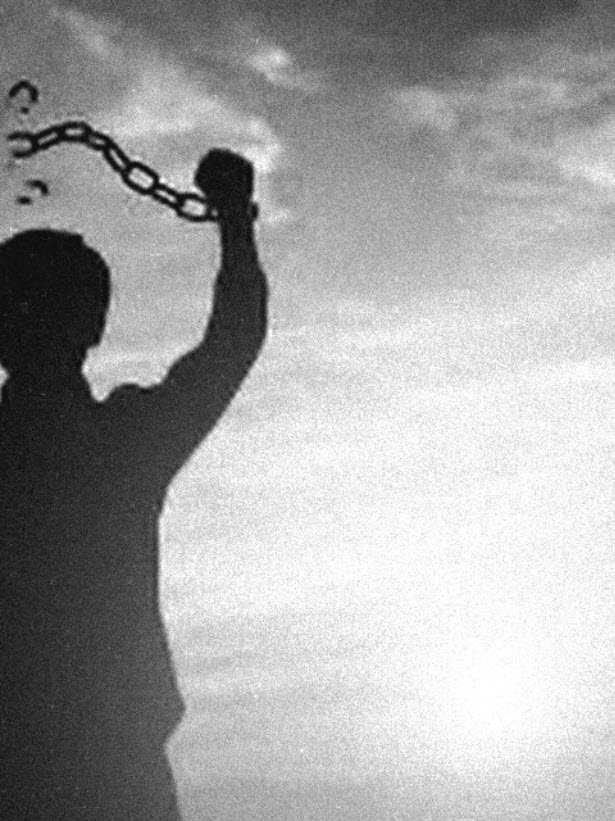
Dialogue between two former prisoners of war:

“Have you forgiven your captors yet?”

“No, never!”

“Well, then, they still have you in prison, don’t they?”

Previously, when presented with idea of Forgiveness my literal brain was satisfied with the basic definition of the term and I pressed forward. My mind instinctively skipped ahead, assigning a TLDR label to the concept, and confidently stated,

“I get it. Someone transgressed, feelings were hurt, trust was ruptured, the aggrieved party received a solemn apology and, if duly satisfied, decided to bury the hatchet.”

It was a largely impersonal and transactional way that I related to Forgiveness. The part I was glossing over was the process by which the hatchet found its way underground. Whether figurative or literal, the practice of putting away weapons at the cessation of hostilities is not an end-result driven process. Through therapy I’ve discovered that emotions are actually these messy, frightfully complicated things that can’t simply be papered over with time or neglect. I know, I was as shocked as you are.

I recently found a 3-fold approach to meditation by Jack Kornfield which focuses on the Forgiveness of others, for yourself and for those who have hurt you. It’s been very beneficial to sit with all three variations because they all offer a different perspective and peace. The more I reflect on my relationship with Forgiveness the more I realize that the hardest person to forgive is actually myself.

In my belabored farm analogy, we each possess a resentment silo. It sits as a monolithic fixture, stoic through the seasons of our life, casting a shadow over our thoughts. We fill it with grievances, slights and insecurities – both directed at ourselves and others – and it eventually becomes full. In turn it releases a trickle of dull pain that leaves us jaded, world weary and cynical. When we forgive – both ourselves and others – we bypass this cycle and reduce the pain and resentment we store in our hearts.  

We are so much more than our worst moments. We know this is true of ourselves, so it must be true for others. Forgiveness does not condone the past, it acknowledges a harmful action, recognizes the suffering it caused and understands the conditions that brought it about. It is a deep process that instead of suppressing or ignoring the pain, confronts it and reckons with it. When we decide to truly forgive this is the ultimate act of self-love, releasing us from the anger and delivering us to place of clarity, grace and calm equanimity.

If you want to see the heroic,

Look at those who can love in return for hatred.

If you want to see the brave,

Look for those who can forgive.

-Bhagavad Gita

3 responses to “Keys to the Prison”

  1. kanede670ef0864 Avatar
    kanede670ef0864

    Powerful stuff RE: forgiving yourself, as well as actually forgiving others. Something that comes to mind for me: the power of deletion (as well as I guess an lol organic plug for WhatsApp as a mode of comms vs. traditional SMS text or email). With an interface like WhatsApp’s, you can delete messages for you, or for all. So, if in a fit of , you text someone (with a fart of your time) a written description of your (complex) emotional state, you often end up with less than a MasterWork. So, you don’t have to stop at the apology and the forgiveness. Take the extra step to go back and delete whatever vile-ness those emotionally-induced fingers introduced. I think that deletion is better than feeling like you have to live with something you wrote just because you wrote it at that (difficult) time in a fit of . And as we know that you cannot delete people, I would suggest deletion via change. Changing someone’s name, even if only temporarily, in the interface you use to communicate with them can help extract a few more chortles and relaxed vibes for dealing with those highly emotional interactions — leading to more forgiveness. Plus, changing a person’s name in your phone does no harm to that person, and can give you a moment of reprieve — i.e. rather than reading regular updates from (making up names) “Joe Biden” or “Donald Trump,” you can instead interact with “Biting Joe” or “Dumpity DrumpTrump.”

    Liked by 1 person

  2. Alan King Avatar
    Alan King

    Thanks for the comment Kane Diggity! I like the idea of the comment deletion on What’s App as an AND1 to the apology. Like, “I got the heartfelt atonement AND the removal of the harmful artifact of our original discord continuation!” followed but LeBron’s step-up/chest thump celly. It’s funny you should mention “Dumpity DrumpTrump” because I considered referencing him in this post but I opted against it. That said, his bigotry, narcissism and pride is a heavy yoke around his neck, not mine. He intends to damage this country out of pure self-interest, but he also must put his head on his pillow each night and hear the drone of his inner monologue deafen him to sleep. I can honestly cultivate forgiveness for him not because he deserves it, but because it brings me peace. I feel bad for him, he looks miserable.

    Like

  3. kanede670ef0864 Avatar
    kanede670ef0864

    One other thought here around the “drone of the inner monologue.” I like this idea that silence is nuanced, and we’re too focused on one vs. the other. We have, of course, the “moment of silence” when someone passes away, and everyone remains quiet — but think about how loud those moments of silence might be inside the participants’ minds.

    Contrast this notion of silence with the silence inside your mind when having a blast with friends, in the flow working on a project, actively listening to a loved one describe how they’re feeling, etc. Yes, there’s noise all around you, but the silence in your mind; the break from having to comb through how you’re feeling and what you’re thinking remains incredibly liberating, valuable, and harder and harder to come by as you get older.

    Like

Leave a reply to kanede670ef0864 Cancel reply