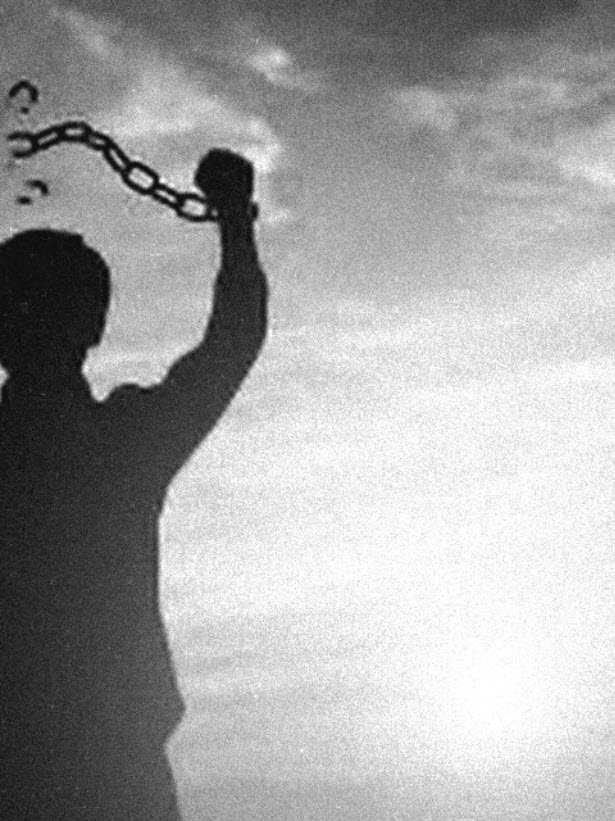
Dialogue between two former prisoners of war:
“Have you forgiven your captors yet?”
“No, never!”
“Well, then, they still have you in prison, don’t they?”
Previously, when presented with idea of Forgiveness my literal brain was satisfied with the basic definition of the term and I pressed forward. My mind instinctively skipped ahead, assigning a TLDR label to the concept, and confidently stated,
“I get it. Someone transgressed, feelings were hurt, trust was ruptured, the aggrieved party received a solemn apology and, if duly satisfied, decided to bury the hatchet.”
It was a largely impersonal and transactional way that I related to Forgiveness. The part I was glossing over was the process by which the hatchet found its way underground. Whether figurative or literal, the practice of putting away weapons at the cessation of hostilities is not an end-result driven process. Through therapy I’ve discovered that emotions are actually these messy, frightfully complicated things that can’t simply be papered over with time or neglect. I know, I was as shocked as you are.
I recently found a 3-fold approach to meditation by Jack Kornfield which focuses on the Forgiveness of others, for yourself and for those who have hurt you. It’s been very beneficial to sit with all three variations because they all offer a different perspective and peace. The more I reflect on my relationship with Forgiveness the more I realize that the hardest person to forgive is actually myself.
In my belabored farm analogy, we each possess a resentment silo. It sits as a monolithic fixture, stoic through the seasons of our life, casting a shadow over our thoughts. We fill it with grievances, slights and insecurities – both directed at ourselves and others – and it eventually becomes full. In turn it releases a trickle of dull pain that leaves us jaded, world weary and cynical. When we forgive – both ourselves and others – we bypass this cycle and reduce the pain and resentment we store in our hearts.
We are so much more than our worst moments. We know this is true of ourselves, so it must be true for others. Forgiveness does not condone the past, it acknowledges a harmful action, recognizes the suffering it caused and understands the conditions that brought it about. It is a deep process that instead of suppressing or ignoring the pain, confronts it and reckons with it. When we decide to truly forgive this is the ultimate act of self-love, releasing us from the anger and delivering us to place of clarity, grace and calm equanimity.
“If you want to see the heroic,
Look at those who can love in return for hatred.
If you want to see the brave,
Look for those who can forgive.“
-Bhagavad Gita



 The Clumsy Interloper
Leave a reply to Alan King Cancel reply