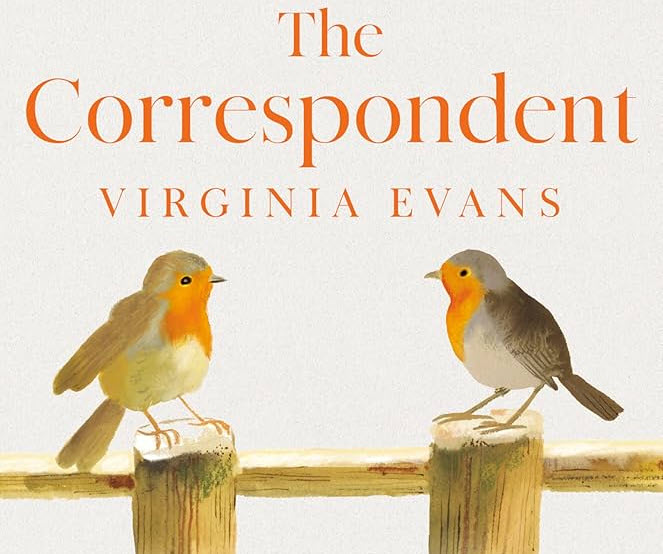
I recently read The Correspondent by Virginia Evans the way you read a book that seems to know something about you already—carefully and a little defensively. It’s a novel built out of letters, in which the protagonist, Sybil Van Antwerp, constructs a narrative not only for the targets of her missives but ultimately of herself. The handwritten letter as a motif is about delay, a theme for Sybil and her life choices, but also an inexorable mechanism of the medium. The unknown span between authorship, sending out in the post and (possibly) receiving reply is a precarious meditation that is baked into this process. That’s probably why the premise unsettled me. Since their birth, I’ve been writing emails to my daughters at addresses they don’t yet know exist, sending small dispatches into the future with no expectation of reply. The book didn’t inspire that project, but it did what the best books do: it made me more closely examine my motivations, and more acutely, the possible impacts of my endeavor.
I set up these email accounts up, in 2017 and 2021 respectively, with the kind of confidence only new parents possess – the belief that intention might someday count as foresight. The idea was simple and probably naïve: write things down so nothing important gets lost. Moments, observations, the texture of who they were becoming. What I didn’t understand then is that time doesn’t preserve so much as it edits. It decides what survives, what gets distorted, and what feels unbearably obvious in hindsight. The emails, like the letters in Evans’s novel, aren’t really about documentation or humble narration. They’re about standing in the middle of a moving life and trying awkwardly to leave a readable mark.
The Correspondent wades into this terrain thoughtfully without a grand thesis about what the letters are supposed to accomplish. Instead, the letters simply accumulate. They misfire. They arrive too late or mean something different than the writer intended. What lingers isn’t the plot so much as the feeling that writing, once sent, stops belonging to you. That recognition – unsettling and familiar – was what pulled me closer to my own archive of sent messages, wondering which parts of myself I’d already surrendered to the future without realizing it.
Someday, when I hand over the passwords, my daughters won’t just be opening a record of their own beginnings. They’ll be leafing through an unintentional self-portrait of their father – what I noticed, what I worried about, what I thought a doting father ought to be. Like the letters in The Correspondent, the emails aren’t safeguarded versions of truth so much as artifacts of timing shaped by who I was when I hit send. I can’t control how they’ll read them, or which parts will resonate, or which will open old wounds. In the end all I can do is write authentically into the void and have faith it will trickle down and touch the heart of my daughters and possibly their daughters. Letters which amount to a flickering ember of a person who lived a life, once upon a time, and had the temerity to write it down for future examination.
As Sybil writes to Mick Watts, “Imagine, the letters one has sent out into the world, the letters received back in turn, are like pieces of a magnificent puzzle, or, a better metaphor, if dated, the links of a long chain, and even if those links are never put back together, which they will certainly never be, even if they remain for the rest of time dispersed across the earth like the fragile blown seeds of a dying dandelion, isn’t there something wonderful in that, to think that a story of one’s life is preserved in some way, that this very letter may one day mean something, even if it is a very small thing, to someone?”



 The Clumsy Interloper
Share Your Thought Bubbles